← All 19 designs DESIGN MOCKUP Business name, reviews, ratings and results shown are fictional and for illustration only. A demo by Pages by Beth.
This page demonstrates
Atelier North
Commissions · 2027 calendar

We take on twelve kitchens a year. Tell us about yours.

Atelier North designs and builds complete kitchens — one project in design, two in build, never more. Applications for the 2027 calendar are open. Not every application is accepted, and we think that's exactly why the ones we take turn out the way they do.

12Projects per year
1Lead designer, every site
48hReply to every application

Project application

Dossier · No. 0347
04 Project budget
05 When would you like to begin?

We respond to every application within 48 hours — including the ones we decline.

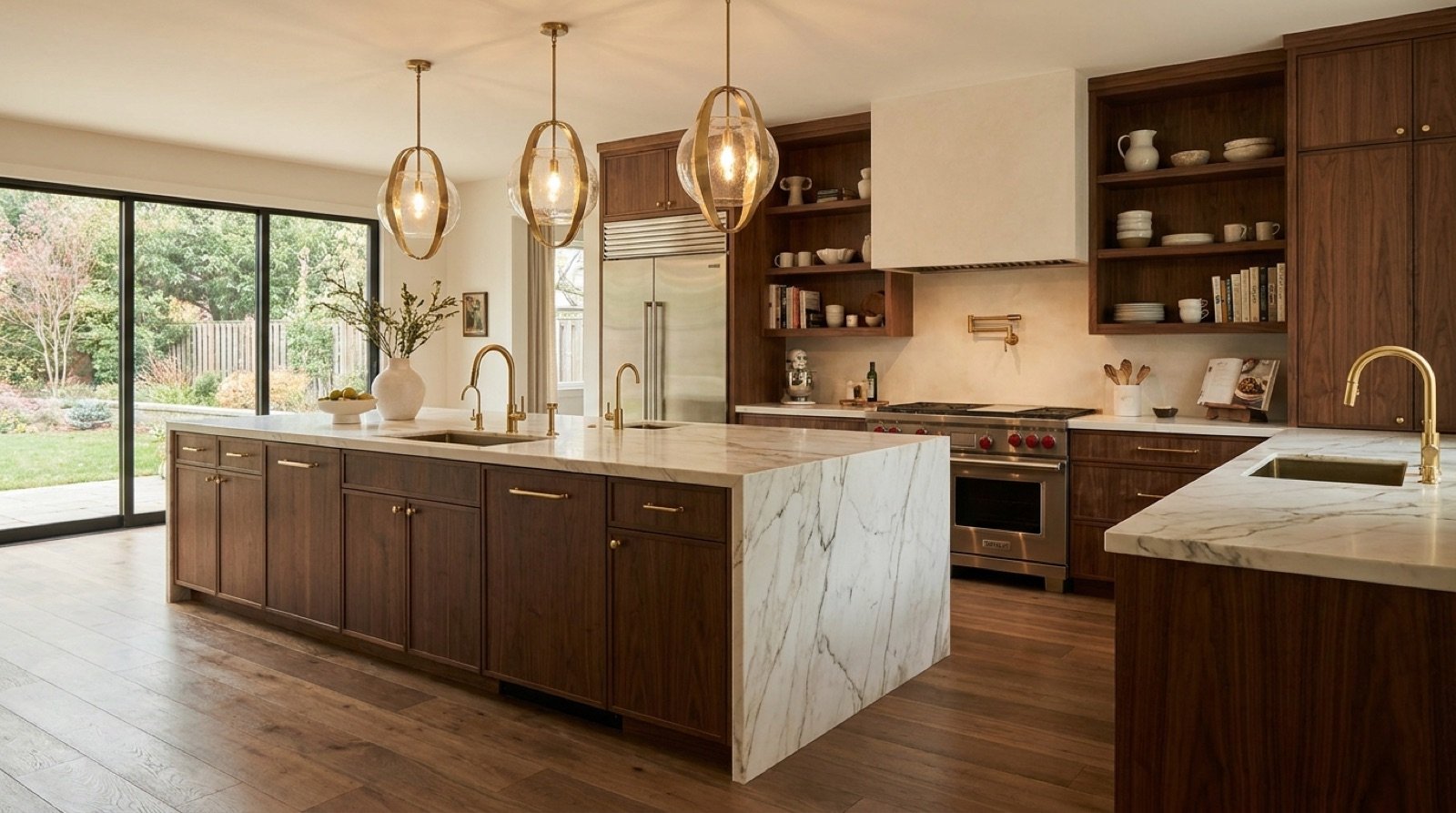
A completed Atelier North kitchen: fumed oak cabinetry, honed stone island, and brushed bronze fixtures in morning light

Commission No. 41 — The Ashwood Kitchen. Fairview Heights, completed spring 2026. Fumed oak, honed Danby marble, unlacquered bronze. Photographed fourteen months after handover, exactly as its owners live in it.

Plate I / III
The constraint

Why only twelve — and why the number can't move

Twelve isn't a marketing device. It's what our structure allows. Every Atelier North kitchen is led personally by our founding designer — she draws it, she walks your site weekly, she signs off on every material that enters your home. We do not hand projects to a "project coordinator" and move on to the next sale.

One project sits in design at a time. Two sit in build. A build runs ten to fourteen weeks when it's done properly — no overlapping trades racing each other, no drywall going up before the inspection everyone hoped would pass. Run that calendar across a year and you arrive at twelve. Some years, eleven.

We could take twenty and hire our way around the limit. Every firm that grew that way built its reputation on the first twelve and spent it on the next eight. We'd rather stay the size of our standards.

The arithmetic, since you should check it: 1 lead designer × 1 kitchen in design (6–8 weeks) + 2 in build (10–14 weeks each), rolling — 52 weeks ÷ that cadence = 12 completions a year. If anyone quotes you a limit, the limit should survive math.
Selection

What we look for in an application

We read every application personally. These are the things that make us say yes — and being honest about them saves everyone time.

A kitchen you intend to live in, not flip

Our work is built for the second decade, not the listing photos. If the house is going on the market in eighteen months, a staging-grade renovation from a volume remodeler will serve you better — and cost half as much.

An appetite for the process, not just the result

Design takes six to eight weeks and it involves you: how you cook, where the coffee happens, which drawer the whole family fights over. Clients who want to disappear and return to a finished kitchen are better served elsewhere, and we'll say so kindly.

A budget that matches the ambition

Our commissions begin around $60,000 and most land between $100,000 and $200,000. We would rather tell you that here, in writing, than an hour into a meeting. If the number doesn't fit, we'll refer you to two smaller builders we trust with our own name.

A home within reach of our benches

We work in Fairview and the Tri-County area, full stop. Our lead designer is on every site weekly and our joinery travels from our own workshop. Distance dilutes both, so we don't stretch.

Recent commissions

Three of last year's twelve

No. 38

The Halloran Kitchen

Cedar Hollow · 14 weeks

A 1920s galley opened into the garden room. The owners bake commercially twice a week; the island is a single slab of end-grain maple sized to their proofing trays.

MaterialsQuartersawn white oak · soapstone · aged brass · handmade zellige

No. 40

The Merritt Kitchen

Fairview Heights · 12 weeks

Built for a family of six and a grandmother who cooks for twelve every Sunday. Two working zones, one long table, and a pantry that swallows a month of groceries.

MaterialsPainted poplar · honed Danby marble · unlacquered nickel · reclaimed heart pine

No. 42

The Okafor Kitchen

Lakemont · 11 weeks

A minimalist brief executed warm: flush walnut runs with no visible hardware, and a hidden breakfast cupboard that closes the kitchen down to a single quiet plane by 8 p.m.

MaterialsBlack walnut · basaltina · smoked glass · patinated bronze

The process

Twenty to twenty-eight weeks, honestly accounted

No phase is padded and none is rushed. These are real durations from our last twelve projects, not brochure optimism.

Phase I

Design 6–8 weeks

Weekly working sessions with our lead designer. We measure how you actually live — then draw, price, and revise until the plan is exact. You approve a fixed scope and a fixed number before anything is ordered.

Phase II

Selections 4–6 weeks

Stone viewed in the yard, not on a screen. Cabinet finishes sampled in your own light. Every material is confirmed, ordered, and received into our workshop before demolition begins — so your kitchen is never held hostage by a backorder.

Phase III

Build 10–14 weeks

One crew, ours, start to finish. The lead designer walks the site every week. You get a written update every Friday, including the ones where the news is boring — boring Fridays are the goal.

In their words

Two of the twelve, a year later

★★★★★ 5.0 across 47 completed commissions since 2011 — every one still standing behind us.

We interviewed four firms and Atelier North was the only one that asked how we cook before asking about our budget. Then they turned us down for the spring slot because our timeline was unrealistic — and told us why. That refusal is the reason we waited for fall. Twenty-six weeks, one surprise (a joist, handled in three days, explained in plain English), and a kitchen my husband now refuses to leave. The Friday emails alone were worth the wait.
Portrait of Margaret
Margaret & Tom EllisonCommission No. 39 · Fairview Heights
I'll admit the application felt presumptuous — I'm the client, why am I applying? Then I watched them decline two projects during our build rather than split the designer's attention, and I understood: the application is how they protect the people they've already said yes to. We had saved for this kitchen for nine years. It came in on the number we approved, to the dollar, and a year on the drawers still close like the first day.
Portrait of David
David OkaforCommission No. 42 · Lakemont
2027 calendar · Applications open

If it's the right twelve, one of them could be yours.

The application takes five minutes and commits you to nothing. Every applicant hears back within 48 hours — accepted, declined, or referred to a firm that fits better.

Begin your application
Designer's notes

Why this page works

This is the most psychologically interesting page in my portfolio, so let me walk you through it. Most landing pages sell. This one makes the visitor apply — and that inversion is the entire conversion engine.

The buyerA couple who has saved for years

They land here after months of quiet research. Price isn't the fear — they've done the math a hundred times. The fear is choosing the wrong firm: the two-year mess, the disappearing contractor, the kitchen that looks like a catalog instead of like them. Every element on this page is aimed at that fear, not at their wallet.

The primal driverStatus — being accepted, not sold to

Here's the inversion. On a normal page, the business chases the visitor, and the visitor's guard goes up — everyone knows what being sold to feels like. An application flips the power dynamic: now the visitor is the one hoping to be chosen. Being accepted by a selective firm is a status event you'll retell at dinner parties; being sold to is not. The moment they start hoping, the conversion has already happened — the form is just where it lands.

The objection"Will they take me seriously — is this beyond me?"

A luxury page can accidentally intimidate its own buyers. The budget brackets answer the objection silently: seeing "$60–100k" as the first option tells the reader their number is on the menu, not below it — no awkward phone call required. And "we respond to every application, including the ones we decline" promises they'll be treated with respect either way. Rejection with dignity is a safe risk to take.

The ladder rungCore offer, high-ticket variant

This is the core offer — no tripwire, no lead magnet, six figures on the line. So the page follows high-ticket rules: only two CTAs instead of five, longer copy, heavier proof, zero urgency theatrics. At this altitude, restraint is the persuasion. A "SUBMIT NOW — 3 SLOTS LEFT!" banner would vaporize everything the typography spent the whole page building.

The dossier form

I styled the hero form as a numbered intake dossier — "Project application, Dossier No. 0347" — instead of a contact form. Same six fields, completely different feeling: filling it out feels like beginning a formal process, which makes the eventual acceptance feel earned. The qualifying questions also filter: the firm's time only goes to real prospects.

The budget brackets

No price anchoring games anywhere on this page — the brackets ARE the filter. Below-bracket visitors self-select out before anyone's time is spent, and everyone else gets confirmation they belong. Notice "Prefer to discuss" at the end: it catches the genuinely wealthy, who often refuse to name a number on a form.

The arithmetic block

"Twelve a year" would be just another marketing claim, so the page shows its work: one designer, one design slot, two build slots, ten-to-fourteen-week builds. Scarcity that invites you to check the math is a different species from a countdown timer. Structural scarcity builds trust while it builds urgency; manufactured scarcity spends trust to buy urgency.

The fit criteria

"What we look for" repels the wrong buyer in writing — kindly, with referrals — which makes every claim on the page more believable, because a firm willing to turn money away has less reason to lie. Meanwhile the right buyer reads the list scoring points: intend to live in it, yes; enjoy the process, yes. Each match deepens the desire to be chosen.

The proof, long-form

Two testimonials, not ten — each long enough to include a flaw (a joist surprise, a declined spring slot). Polished five-star blurbs bounce off high-ticket buyers; a story with a handled problem in it reads as true. Both quotes also do double duty: they show the application and the refusals from the client's side, pre-answering "what's it like to be judged by these people?"

The museum caption

The hero photograph is captioned like a plate in an exhibition catalog — commission number, materials, "photographed fourteen months after handover." That last phrase is proof smuggled in as caption: the work still looks like this a year later. The register of the caption is itself an argument: firms that document work this way tend to build work worth documenting.

Two CTAs, on purpose

My house rule is a CTA every screen-height — and this page deliberately breaks it. High-ticket application pages convert on conviction, not on catching an impulse, so there are exactly two asks: the dossier at the top, one quiet invitation at the end. Between them, the page does nothing but earn the second one.

Questions buyers actually ask

Straight answers, including the uncomfortable ones

What if my budget is below the lowest bracket?

Then Atelier North honestly isn't the right fit — and the reply will say so rather than stretch your budget to reach their minimum. A real firm at this level keeps a short list of two or three smaller builders it trusts and refers below-bracket applicants to them by name.

That referral costs the firm nothing and earns enormous goodwill. In my experience, half the people referred out come back years later with a bigger project — and they remember who was straight with them.

Why would a business decline paying clients?

Because at twelve projects a year, one bad-fit project costs more than it pays. A client who wants a fast, hands-off renovation will be miserable inside a process built around weekly design meetings and material selections — and a miserable client consumes the attention that eleven other kitchens are paying for.

Declining bad fits isn't arrogance. It's how the firm protects the experience the right clients are buying. And on this page, every visible refusal makes every acceptance worth more.

How long is the wait after acceptance?

Design typically begins two to four months after acceptance, depending on where the current twelve sit in their schedules. The page says this plainly instead of burying it.

Here's the counterintuitive part: at this price point, a stated wait is proof of demand, not a deterrent. Nobody waits in line for an empty restaurant. Hiding the wait would make the scarcity claim look fake; stating it makes the whole page more credible.

Does applying cost anything or commit me to anything?

No. The application is free and commits you to nothing — it's a structured conversation starter, not a contract. If accepted, the first real commitment is the design agreement, which is presented and priced in writing before you sign anything.

This matters mechanically: an application funnel only works if applying is genuinely zero-risk. Any fee or obligation at this stage would collapse the dynamic — people will audition for acceptance, but not pay for the privilege of maybe being rejected.

Is the "twelve kitchens" number real, or is it marketing?

It's structural, and the math is right there on the page: one lead designer, one project in design and two in build at any moment, builds running ten to fourteen weeks. Run that calendar across a year and you get twelve. Some years eleven.

That's the test I'd apply to any scarcity claim, on any page: does the limit survive arithmetic? A countdown that resets every Tuesday doesn't. A capacity limit you can derive from the staffing does. If a firm claims a limit, the limit should be checkable — and if you're a business owner reading this, that's the only kind of scarcity I'll build for you.

What happens after I submit an application?

Every application gets a personal reply within 48 hours — accepted, declined with the reason, or referred to a better-fitting firm. If it looks like a fit, the next step is a 45-minute walkthrough of your kitchen with the lead designer. Only after that walkthrough does anyone discuss a design agreement.

And to be clear, since this is a portfolio demo: nothing here actually sends. The form is a mockup, the firm is fictional, and the 48-hour promise belongs to the design, not to a real inbox.