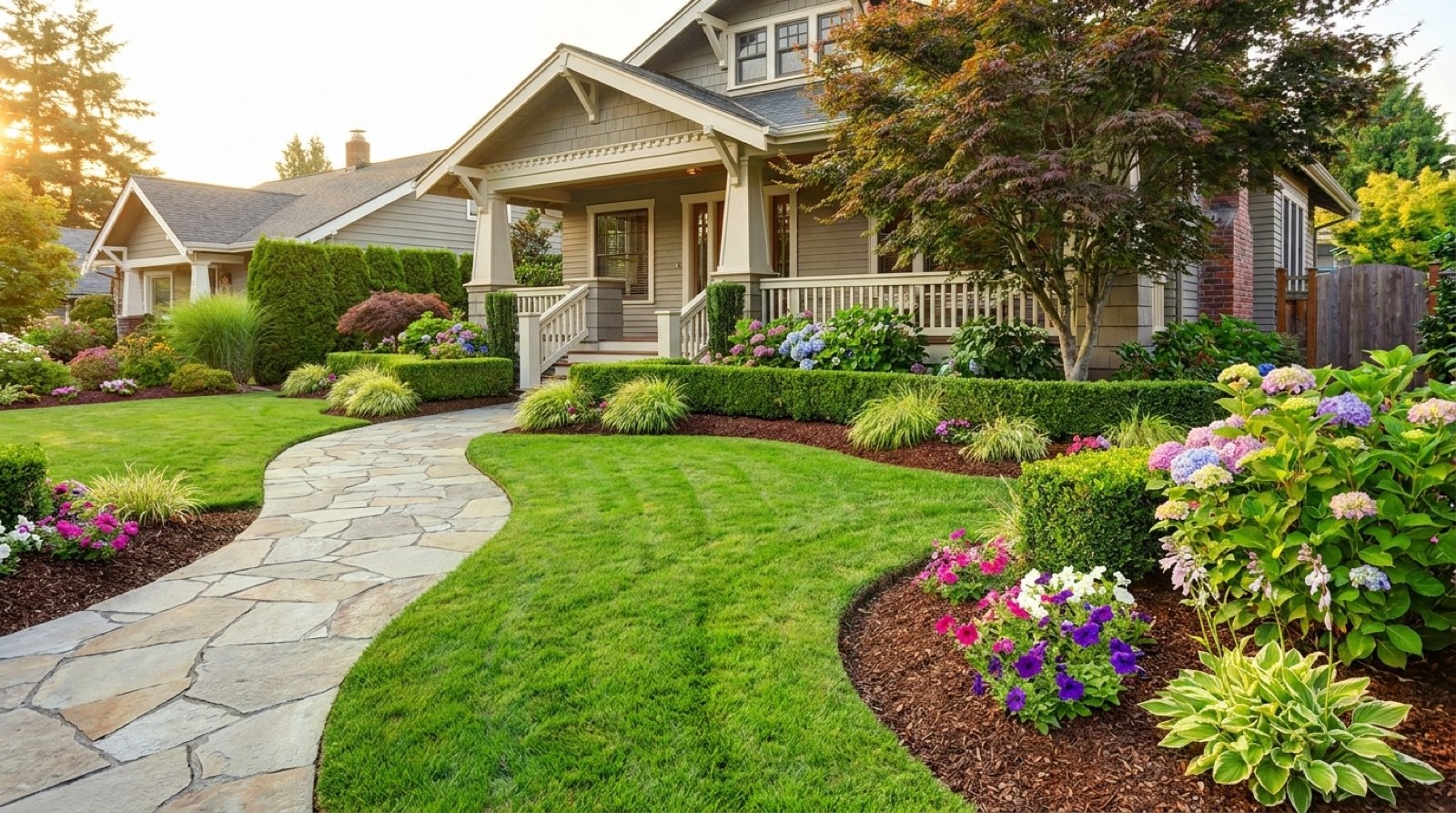
The corner-lot turnaround
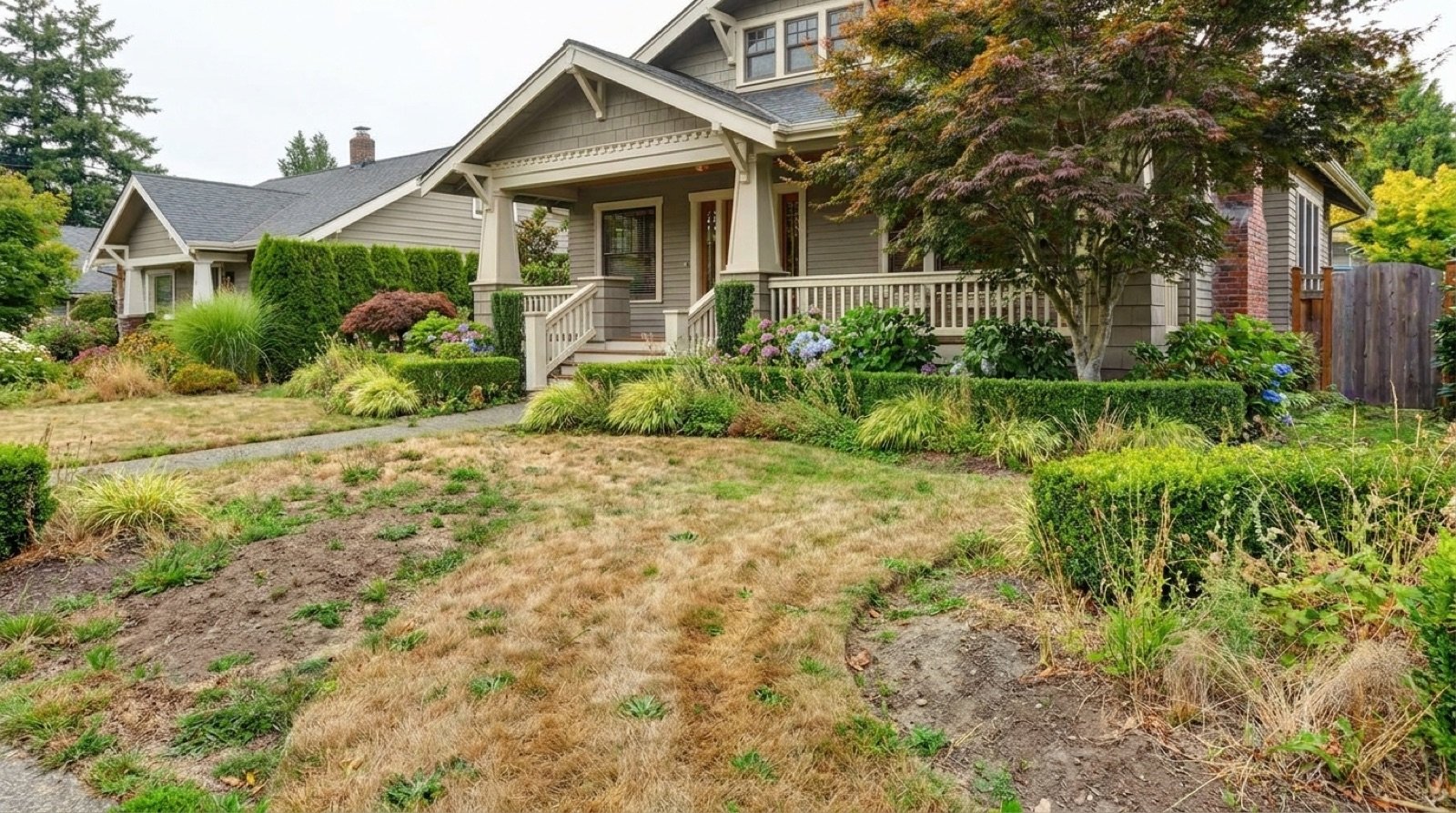
New bed lines, stone border, fresh sod and two flowering trees. The most-photographed corner in the cul-de-sac by June.
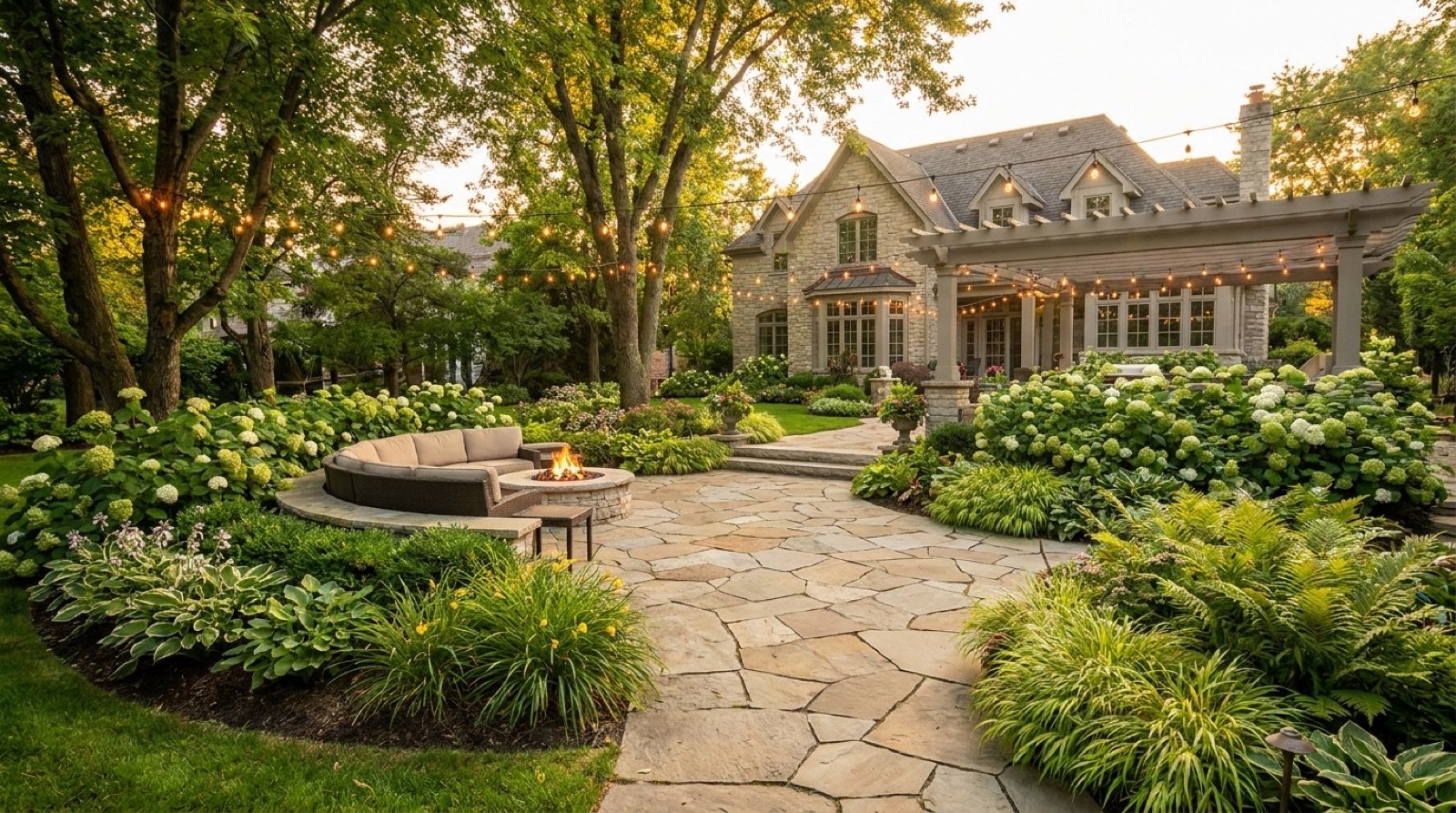
Book a free design visit this week. We walk your yard, sketch the concept, and hand you a fixed quote — the number we give you is the number you pay. No vague "it depends," ever.

 ★★★★★
4.8 · 167 reviews from Tri-County homeowners
★★★★★
4.8 · 167 reviews from Tri-County homeowners
Takes 20 seconds. We come out, sketch it, and quote it — you decide with a real number in hand.
This is a Maple Grove backyard we finished last spring — patchy turf and a bare fence line turned into an outdoor room the owners use four nights a week. Slide it yourself.
 BEFORE
AFTER
BEFORE
AFTER
Free visit · fixed quote on the spot · zero obligation
Forty-five minutes, one designer, and you end up with a plan and a real number — whether you hire us or not.
We walk the whole property with you — what you hate, what you host, how you actually want to use the space.
Measurements, sun mapping and a drainage check, so the design fits your yard's reality, not a catalog photo.
A designer sketches the layout with you on the spot — beds, hardscape, lighting, sight lines from the street.
You get an itemized, fixed price before we leave — and it's the price you pay. No creeping totals mid-project.
Why we ask your budget first: so the sketch you fall in love with is one you can actually build. We design to your bracket, not past it.
Design visits are free through spring — keep the sketch either way
Every project below started with the same free design visit — and a homeowner who tapped a budget bracket on this page.
New bed lines, stone border, fresh sod and two flowering trees. The most-photographed corner in the cul-de-sac by June.
Paver patio, fire bowl, privacy screen and low-voltage lighting. Built for a family that hosts every long weekend.
Front and back, gutted and rebuilt: regraded lawn, curved beds, path lighting and an irrigation system that runs itself.
Tap a bracket, book a visit — the quote is free and it's final
That's not a countdown gimmick — it's how landscaping works in the Tri-County area. Design visits booked now get first pick of install dates and finish comfortably before Memorial Day weekend. Wait until May, and you're looking at a summer install on a torn-up lawn.
◉ 7 pre–Memorial Day install slots remainingBooking a design visit holds your place in the queue — it doesn't commit you to anything
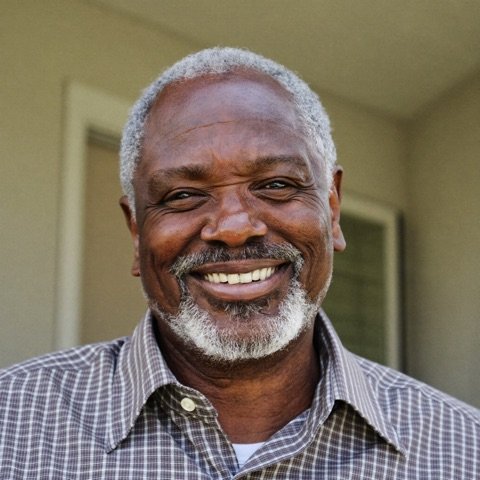
"I used to park in the garage fast so I wouldn't have to look at the front yard. Now I catch myself slowing down at the corner just to see the house. Three neighbors have knocked to ask who did it — and the quote GreenCrest gave us at the visit was the exact number on the final invoice."

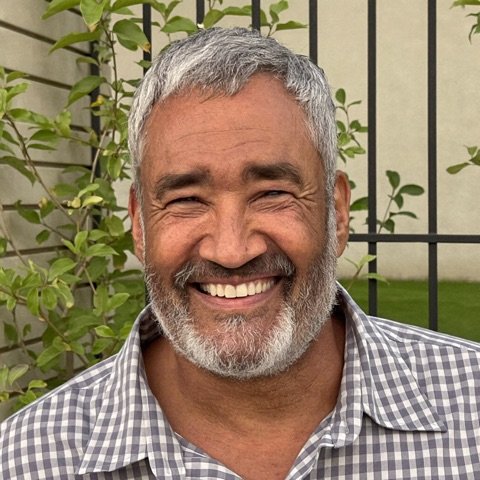
"We told them our bracket on the form and honestly expected the usual upsell dance. Instead the designer sketched a backyard we could afford, quoted it on the spot, and the crew was done in nine days. We hosted twenty people that Memorial Day. Nobody talked about anything except the yard."

One free visit. One sketch. One fixed number. If the number works, you're on the calendar — installed before Memorial Day.
Free through spring · fixed quote · zero obligation
Prefer to talk it through? Call (555) 014-2387
Landscaping isn't sold with plant lists. It's sold with a feeling in the driveway. Here's the reasoning, element by element.
This visitor isn't researching horticulture. They just drove past a neighbor's new yard, or they're hosting Memorial Day, and their own lawn embarrasses them a little every single time they come home. They're on a phone, half-decided, looking for a reason to finally act — or an excuse to put it off another year. Every element on this page exists to remove the excuses.
Your kitchen renovation is for you. Your yard is for everyone: every neighbor, every guest, every school pickup that drives past. So I lead with status — "the best yard on the street" — and let comfort (a backyard you actually use) play second. What I never lead with is features. "Full-service design and installation" describes every landscaper alive and persuades no one.
The biggest trust problem in this vertical is price opacity — homeowners assume the quote will be vague, padded, and grow mid-project. This page attacks that from the first screen: the sub-headline promises a fixed quote at a free visit, and the form asks for a budget bracket up front, which makes talking about money feel normal from the very first click instead of a confrontation at the end.
This is a core-offer page: it sells the design visit that leads directly to a five-figure install. No lead magnet detour — a homeowner embarrassed by their yard doesn't want a PDF, they want it fixed. What makes it work as a direct ask is the season: spring gives the page a real deadline, and the free visit with a keep-it-either-way sketch keeps the commitment feeling small.
I put the form in the first screen because every scroll between the visitor and the form costs leads. It asks exactly four things — which yard, which budget bracket, name, phone — all answerable off the top of the head while standing in the driveway looking at the problem. The radio cards do the heavy lifting before we ever ask for contact details, which is the order that converts.
This is the single most persuasive image type in local services, and it's not close. A static "after" photo is a claim; a draggable before/after is an experience the visitor performs on themselves — they control the reveal, so their brain files it as something they discovered rather than something they were told. That's self-persuasion, and no testimonial can match it. It gets the centerpiece slot right after the hero.
Asking for money information usually kills forms. Brackets don't, because a tap is low-stakes and "Help me figure it out" gives the undecided a door. Strategically, the brackets do double duty: they dissolve the price-opacity objection by making money speakable from click one, and they let the designer arrive with ideas the homeowner can actually build — which is what the "why we ask" note on the page says out loud.
Every photo on this page shows the result — a golden-hour backyard you want to be standing in — never the service. No mulch piles, no guys with shovels, no truck with a logo. The homeowner isn't buying labor; they're buying the moment a neighbor slows down at the corner. The hero image sells that moment before the headline says a word.
Urgency only works when it's true. Landscaping calendars really do fill by early April, so instead of a fake countdown I show the calendar itself: March full, April filling, May open. It reads as information, not pressure — and honest scarcity converts better than manufactured scarcity precisely because the visitor can't dismiss it as a trick.
The hero carries status proof — 4.8 stars, 167 reviews, trust badges — for the fast, skimming brain. The reviews section carries personal proof: two named homeowners with faces, and notice both testimonials mention the fixed quote holding. That's deliberate. Proof works hardest when it's aimed at the page's central objection, not just at general niceness.
Below the fold the page re-runs the persuasion arc — proof, offer detail, projects, urgency, testimonials — and after every beat there's a button, each with different copy: "Show me what my yard could be," "Schedule my walk-through," "Lock in a spring install date." Different phrasings catch different moods, and no one ever has to scroll back up to say yes.
Plainly, because almost nobody in this industry will say it: a front-yard refresh (beds, borders, plants, mulch, edging) usually lands between $3,500 and $8,000. A full front-yard redesign with sod, stone and lighting runs $8,000 to $15,000. A backyard with a patio, privacy planting and a fire feature is typically $12,000 to $30,000, and a full-property transformation starts around $25,000.
Your exact number comes as a fixed quote at the design visit — and the number we quote is the number you pay. If a landscaper won't give you ranges before setting foot on your property, they're pricing you, not the yard.
Less than you'd think, and shorter than you'd think. Most front yards take 3–5 working days; a full backyard runs one to two weeks. You get a start date, one point of contact, and a walkthrough at the end of every day so you always know what happened and what's next.
The crew protects driveways and access paths, hauls away all debris, and leaves the site broom-clean every evening. You don't need to be home, and nothing requires access to the inside of your house.
It converts the traffic you already have — it doesn't create demand out of thin air. Right now people are finding you from Google, a truck sighting or a neighbor's recommendation, landing somewhere, and leaving without calling. That's a leak. A page with one goal and one door stops the leak.
If you're running ads, this is the difference between paying for clicks and paying for customers.
So we design something you can actually build. There is no worse outcome than falling in love with a $40,000 concept on a $12,000 budget — you end up disappointed and we end up with a sketch nobody uses. The brackets aren't a commitment and nobody holds you to them; they just point the design visit at ideas in your range.
Notice they're brackets, not a blank box: you don't need an exact number, just a lane.
Earlier than feels necessary. Spring install slots genuinely fill by early April — that's not a marketing line, it's how every landscaping calendar in the region works. Design visits booked in late winter get first pick of install dates and comfortably finish before Memorial Day.
And a quiet tip: fall is the secret second season — planting conditions are excellent, the calendar is open, and the yard wakes up finished in spring.
Then we change it — that's the honest answer. A landing page is a hypothesis: this headline, this offer, this proof, for this visitor. If the calls don't come, we test a new headline, adjust the offer, reorder the proof, and measure again.
Anyone who guarantees you a result before seeing data is lying to you. What I can promise is a page built on principles that consistently work for local services, and a straight answer about what the numbers say.