โ† All 19 designs DESIGN MOCKUP Business name, reviews, ratings and results shown are fictional and for illustration only. A demo by Pages by Beth.
This page demonstrates
Free 12-page report ยท 10-minute read

Read these 7 questions before you sign anything with a contractor.

You're about to hand a stranger a five-figure check and the keys to your house. This free report gives you the seven questions that expose a bad contractor in the driveway โ€” and tells you exactly what the wrong answers sound like.

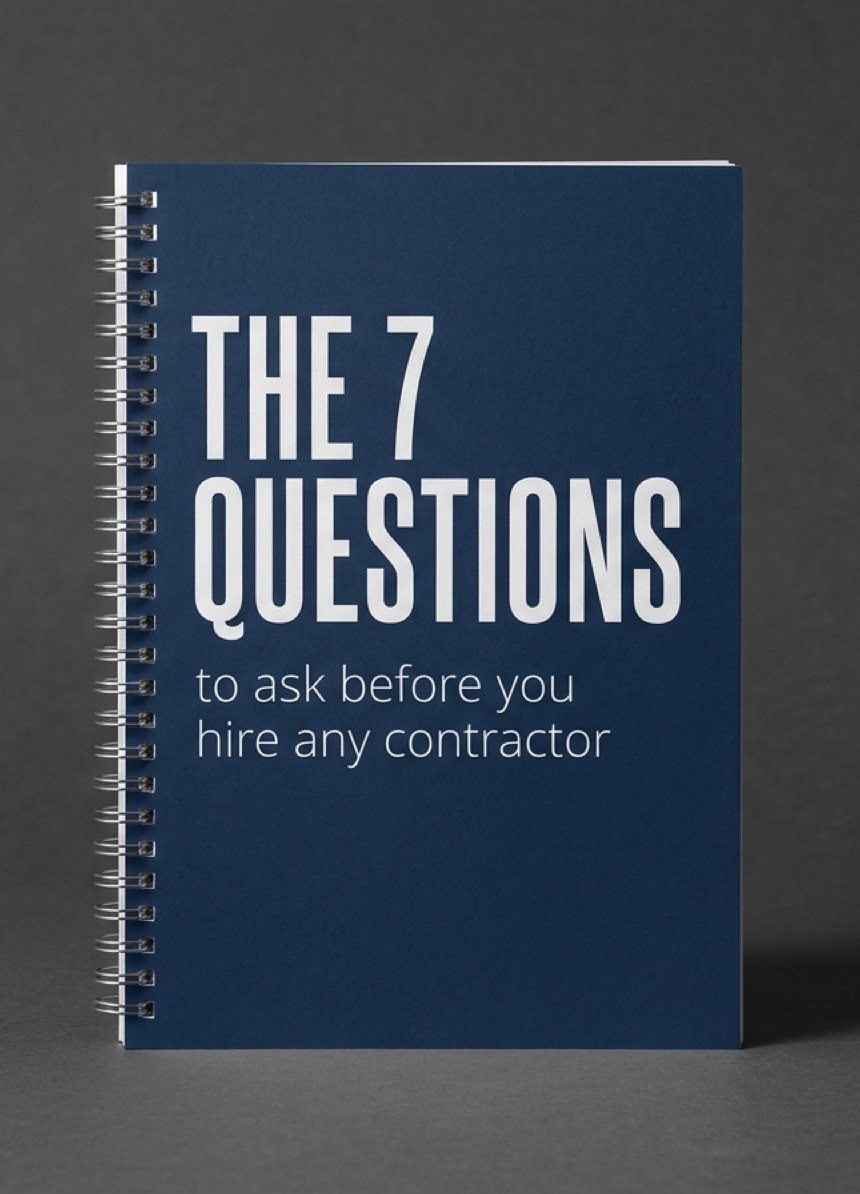
Spiral-bound report titled The 7 Questions FREEinstant PDF
12 pages Checklist included No fluff, no pitch inside

Get the free report

Tell us where to send it. It arrives in about a minute.

โœ“ No spam, ever. One short email series after the report, unsubscribe with one click, and your address is never sold or shared. That's the whole deal.
Downloaded 4,200+ times by homeowners across the Tri-County area
Inside the report

Three of the seven, free โ€” right here.

So you know this is a real list, not a headline trick. The other four โ€” including the deposit question โ€” are in the report.

1

The one-line insurance question that instantly separates a covered contractor from a pretender โ€” and the evasive answer that actually means "no."

2

Why "How long have you been in business?" is the wrong question โ€” and the two-part version that catches companies that dissolve and rename after every lawsuit.

3

The question about who actually shows up to do the work โ€” because the person quoting your job is often not the crew swinging the hammers.

4 In the free report
5 In the free report
6 In the free report
7 In the free report
Send me the 7 questions

Free ยท instant PDF ยท unsubscribe anytime

What skipping this costs

The $9,000 lesson nobody should pay for twice.

Last spring, a couple in Fairview handed a contractor a $9,000 deposit for a kitchen remodel โ€” half the job, paid up front, because "that's how everyone does it." He tore out their cabinets, stopped answering his phone by week three, and his business address turned out to be a mailbox at a shipping store. Question #5 in this report would have ended that conversation in the driveway โ€” before the check was ever written.

A composite story, based on the pattern inspectors described to us over and over. The names change. The sequence never does.

From a reader
"I almost signed with the first roofer who quoted us. Question #4 made me ask about the warranty registration, and his answer fell apart on the spot. The second bid came in $3,000 lower โ€” with paperwork the first guy couldn't produce."
Portrait of Dana K.
Dana K. Homeowner, Cedar Falls
Saved $3,000
HW

Who's behind this report?

HomeWise Reports is a small independent publisher of plain-English homeowner guides. The 7 Questions was built from interviews with building inspectors, insurance adjusters, and contractors candid enough to explain how the bad actors in their own trade operate. No one who sells contracting work had a say in what's inside.

Ten minutes of reading. Five figures of protection.

The next contractor you talk to will answer these seven questions โ€” or teach you something important by refusing to.

Send me the free report

Same report, same deal: first name, email, done.

๐Ÿ”’ No spam. One short series, one-click unsubscribe, never sold.

4,200+ downloads and counting

HomeWise Reports ยท Fairview ยท Figures shown are illustrative for this design mockup.

Designer's notes

Why this page works

This is an opt-in page โ€” the first rung of a value ladder. Its only job is to turn a stranger into a hand-raiser. Here's the reasoning behind every choice, in plain English.

The buyerFive figures, and quietly terrified

The person landing here is about to spend $15,000โ€“$60,000 with someone they found three days ago, and they've heard the horror stories. They're not shopping for a report โ€” they're searching, at 10pm, for some way to feel less exposed. The page meets that exact moment: it doesn't sell anything, it offers armor.

The primal driverSecurity โ€” not getting burned

I lead with security, not knowledge. "Learn about hiring contractors" is a school assignment; "don't sign anything until you've read these" is a warning from a friend. Same content, completely different pull. Fear of loss moves people roughly twice as hard as promise of gain, so every headline on this page is framed as protection.

The objection"You'll spam me"

Nobody worries whether a free PDF is good enough โ€” they worry what it costs their inbox. So the no-spam promise sits directly under the button, at the moment the fear fires, and the FAQ answers it again in full honesty: yes, there's an email series; yes, unsubscribe works; no, we never sell the list. Naming the catch out loud is what makes the offer feel safe.

The ladder rungThe lead magnet โ€” and its math

This is "the bribe": free information traded for a hand-raise. The economics are the whole point โ€” someone who opted in is roughly three times more likely to respond to a future offer than a cold stranger. So the report's job is not to sell anything. Its job is to be so genuinely useful that the reader opens the next email. The selling happens later, one rung up the ladder.

The two-field form

First name and email, nothing else. On opt-in pages, every added field costs a slice of conversions โ€” a phone field alone can cut signups by a third, and I don't need a phone number to send a PDF. Ask for the minimum viable handshake now; earn the right to ask for more later.

The 3-open, 4-locked tease

Showing three full questions proves the list is real and specific โ€” no bait. Blurring the other four opens a curiosity loop the reader can only close with the form. If I showed all seven, there'd be no reason to opt in; if I showed none, there'd be no reason to believe.

The report cover

A spiral-bound mockup with weight, a shadow, and a slight tilt. People trade their email for things, not concepts โ€” the moment the report looks like an object you could hold, its perceived value jumps. "Subscribe to our newsletter" offers a chore; this offers a possession.

The $9,000 story

Three sentences, one number, one vivid detail (the mailbox at a shipping store). Statistics inform; stories are what people feel in their stomach. It's placed after the tease so the reader already knows the questions exist โ€” the story supplies the price of not having them.

The proof stack

Two kinds, doing two jobs. Status proof โ€” 4,200+ downloads โ€” answers "is this legitimate?" Personal proof โ€” Dana's face and her specific $3,000 โ€” answers "will this work for me?" Specific numbers beat glowing adjectives every time, because specificity sounds like memory, not marketing.

The missing navigation

Deliberately sparse: no menu, no footer links, no social icons. An opt-in page with navigation is a leaky bucket โ€” every link is a door out of the room, and each exit costs conversions you paid to bring here. One goal, one door. The sparseness isn't laziness; it's the design.

The CTA, three times

"Send me the 7 questions" โ€” call-to-value copy that names the payoff, not the mechanism ("submit," "download"). It appears at the hero, after the tease, and at the end, because readers become convinced at different depths of the page. Same words every time: one message repeated converts; competing messages split attention and all lose.
Honest answers

Questions people actually ask

Is the report actually useful, or is it a sales pitch in a PDF?

It has to be genuinely useful or this whole page fails. A lead magnet is a first impression: if the free thing is thin, nobody believes the paid thing will be better. The report is 12 pages of the seven questions, why each one matters, and what a bad answer sounds like โ€” no pitch inside the report itself. The relationship-building happens afterwards, by email, and you can leave at any time.

What happens after I download it?

Honestly: the report arrives immediately, and over the next couple of weeks you'll get a short email series โ€” a few messages that go deeper on hiring contractors, and eventually an offer for the paid guide. That's the deal on every free-download page on the internet; most just don't say it. Every email has an unsubscribe link that works on the first click.

Why do you only ask for my email and first name?

Because every extra field costs signups. Phone number, address, budget โ€” each one makes a percentage of people close the tab, and none of them are needed to send a PDF. A free report is a small handshake, so the form asks for the smallest thing that makes the handshake work: where to send it, and what to call you.

Who wrote it?

HomeWise Reports is a small independent publisher of plain-English homeowner guides. This report was put together from interviews with building inspectors, insurance adjusters, and contractors who were willing to explain how the bad actors in their own trade operate. Nobody who sells contracting work had editorial input.

Will you sell my email address?

Never. Not sold, not rented, not swapped with a "partner list." You'll only ever hear from HomeWise Reports, and only until you unsubscribe. An email list is only worth anything if the people on it chose to be there โ€” selling it would burn the one asset this whole page exists to build.