

← All 19 designs DESIGN MOCKUP Business name, reviews, ratings and results shown are fictional and for illustration only. A demo by Pages by Beth.
This page demonstrates
🎙 Next live session: Thursday · 7:00 PM CT 356 of 500 seats already taken
Save my seat
Free live training · 60 minutes

You think getting reviews means begging. The owners with 100+ five-star reviews run a system.

In one free hour, local-business consultant Reya Marsh walks you through the exact three-part system her clients use to quietly stack five-star reviews — without begging, bribing, or buying a single one. No software. No marketing degree. Just the phone in your pocket.

THUNext session
Thursday · 7:00 PM Central Live on your screen · 60 min + open Q&A · Replay for registrants
Doors close in
Past attendee Past attendee Past attendee ★★★★★
Joined by 2,140+ local owners across past sessions

Reserve your free seat

Thursday · 7:00 PM CT — takes 20 seconds, costs nothing.

🔒 No spam, no card, unsubscribe anytime.

144 seats left for Thursday's session

2,140+ owners trained 60 min zero-fluff format 93% stay for the Q&A Free — and complete on its own
What you'll learn — in one free hour

Three things the 100-review businesses in your town figured out

Each one takes about fifteen minutes to teach and works the same week you use it. Bring a notepad.

Secret 01 · Timing

Why asking for a review at the counter is the worst possible moment

There's a 20-second window — and it isn't when they pay, and it isn't the next day. Reya shows you exactly where it sits in your customer's visit, and the one sentence that opens it.


Secret 02 · Volume

The "quiet ask" that gets 4× more reviews than a polite request

It's not a discount, it's not a QR code on the wall, and it never sounds like asking. You'll see the exact wording — and the surprising reason the businesses using it almost never talk about it.

Secret 03 · Damage control

How one specific reply turns a 1-star review into new customers

Most owners reply to bad reviews for the reviewer. That's the mistake. There's a different audience reading that reply — and one structure that wins them over every time. Reya breaks it down live.

Save my seat — it's free

Thursday · 7:00 PM CT · replay included for registrants

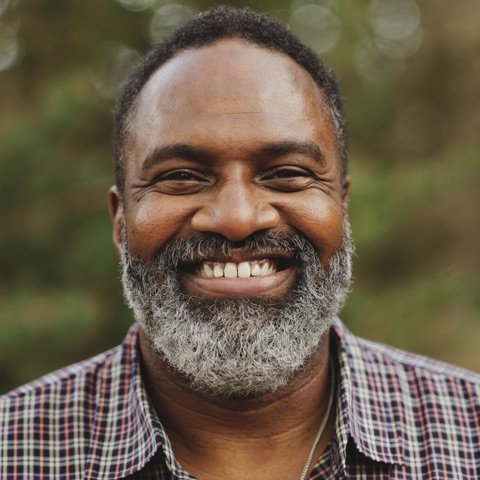
Reya Marsh, workshop host
Reya MarshYour host · local-business consultant
Who's teaching this

Reya has run this play for 300+ local businesses. Thursday, she hands it to you.

Reya Marsh spent nine years as a reputation consultant for local businesses across the Tri-County area — the coffee shops, dental offices, and plumbing companies you actually drive past. Her whole practice is built on one observation: the local businesses winning on Google aren't better at their trade — they're better at collecting proof.

She's since packaged the system into a 60-minute working session. No theory hour, no life story: you leave with the timing, the wording, and the reply structure, ready to use Friday morning.

300+local businesses coached 1-on-1
9 yrsin local reputation consulting
40k+five-star reviews generated by her clients

Reya Marsh is a fictional host and these figures are illustrative — this page is a design demo showing how a real host's track record would be presented.

The agenda — nothing hidden

Sixty minutes, minute by minute

You'll notice the last block is labelled honestly. That's on purpose — see the FAQ.

0:00

Doors open · the 100-review math

Why review count now outranks price, photos, and even star average in how locals choose — and the number that acts as your town's tipping point.

0:08

Secret 1 — the 20-second window

The precise moment in a customer visit when a review ask lands, and the sentence that opens it without a whiff of begging.

0:22

Secret 2 — the quiet ask

The wording that quadruples response, why it never mentions "review," and how to hand it to your staff in one team meeting.

0:36

Secret 3 — the reply that recruits

The three-line reply structure for negative reviews that's really written for the 200 strangers reading over the reviewer's shoulder.

0:50

Open Q&A — bring your weirdest situation

Ask about your business specifically. This is why the room is capped at 500 — see below.

0:55

Full transparency: a short offer

In the last few minutes Reya describes her paid implementation program, for owners who want it done with her. It's optional, it's brief, and everything before it stands on its own.

Save my seat — it's free
Why seats are limited

500 seats. That's a real ceiling, not a sales trick.

The session runs on a live platform capped at 500 attendees — and Reya keeps it there deliberately, because the Q&A stops being useful in an unlimited room. When it's full, it's full until the next session.

Thursday's session: 356 seats taken

Registrations are first-come. If you're reading this after it fills, your registration rolls to the next session automatically.

144 of 500 seats remaining
Claim one of the 144
From past sessions

What owners did the week after attending

★★★★★
"I'd been asking at the register for two years and getting maybe one review a month. Used the timing thing from the session — eleven reviews in the first two weeks. My competitor across the street finally has something to worry about."
Marcus Deel Marcus DeelAuto repair shop owner · Cedar Falls
★★★★★
"I came in braced for a pitch-fest. The first fifty minutes were genuinely the training, exactly as promised. I used the negative-review reply on a 1-star we'd been dreading — the customer actually came back, and two new clients mentioned that reply when they booked."
Priya Nandal Priya NandalSalon owner · Fairview

Can't make it live on Thursday?

Register anyway. Every registrant gets the full replay for 72 hours plus the one-page system checklist. Live gets you the Q&A; the replay gets you everything else.

Register for the replay
Thursday · 7:00 PM CT · Free

Your competitor's 400 reviews weren't luck. Come see the system.

One hour. Three secrets. A notepad's worth of things you can do Friday morning. If it's not worth your hour, the unsubscribe link is one click.

Save my seat — it's free

144 seats left · replay included · no card, ever

Beth's teardown

Why this page works

A webinar registration page is a lead magnet with a superpower: it doesn't just capture an email, it books an hour of trust-building. Here's the thinking behind every piece.

The buyerLosing to the shop with 400 reviews

The person landing here owns a good local business and is quietly furious: a competitor with worse work but 400 Google reviews takes the customers. They've tried asking at the counter, felt awkward, and stopped. They don't want theory — they want the trick the other guy clearly knows.

The primal driverStatus first, money right behind it

Review count is public rank — every neighbor can see who's "winning." That's status, and it stings more than lost revenue. The page leads with the status wound ("your competitor's 400 reviews weren't luck") and lets money ride shotgun. Features — "learn review strategies" — would put this same reader to sleep.

The objection in the headline"I'd have to beg, and begging is beneath me"

The headline is a contrast engine: it states the belief ("getting reviews means begging"), then supplies the better truth ("the owners with 100+ run a system"). The sub-head kills the three ugly cousins by name — begging, bribing, buying. The reader's dignity objection is dissolved before the form appears.

The ladder rungA lead magnet that pre-sells trust

This is lead-magnet territory — free thing for an email — but a webinar is the richest version of it. A PDF gets skimmed; a workshop puts the host in the advisor's chair for an hour before any offer exists. By the time Reya mentions her paid program, she's already taught. Teaching first is what makes the eventual sale feel like a next step, not a pitch.

Hero registration form

First name, email, business type — three fields, all answerable without thinking. The business-type select isn't decoration: it lets the confirmation email and the session itself speak to their vertical, and the tiny act of self-identifying deepens commitment to attend. The CTA "Save my seat — it's free" handles the cost objection inside the button.

Date-and-time block

The ticket treatment makes the session feel like an event with a door, not a video floating in time. I used "Thursday · 7:00 PM CT" next-session framing so this demo never shows a stale date — on a live build, the date auto-rolls to the next real session, so the page is permanently current without anyone touching it.

The countdown — and why it's honest here

Fake evergreen countdowns reset for every visitor and count down to nothing; people feel that, and it poisons the whole page. Here the clock points at a real event that genuinely starts and a room that genuinely closes. Same visual pressure, opposite integrity — urgency is only a lie when the deadline is.

Curiosity-loop teasers

The three secrets each name a specific gap — the 20-second window, the quiet ask, the reply that recruits — and refuse to close it. Specificity makes them credible; the open loop makes them itch. If the page resolved them, there'd be no reason to attend. A teaser's job is to prove the answer exists, not to give it.

Host credibility block

An hour is a bigger ask than an email, so the page must answer "who are you to teach me?" Face, nine-year track record, client numbers — placed after the secrets have created appetite, before the agenda asks for the time. On the live build these are the host's real, verifiable numbers; here they're marked illustrative.

Seat scarcity, framed with its reason

The 500-seat cap comes with its explanation attached: Q&A dies in an unlimited room. Scarcity plus reason reads as policy; scarcity alone reads as pressure. The seat meter makes the cap visual, and the "your registration rolls to the next session" line keeps it honest even for latecomers.

The transparent pitch on the agenda

Minute 55 — "a short offer" — is printed on the agenda itself, and the FAQ repeats it. Everyone knows webinars end in a pitch; pretending otherwise costs trust the moment it happens. Declaring it converts the biggest objection ("this is a 90-minute sales pitch") into evidence of honesty, and the attendees who stay past minute 50 are the warmest leads of all.

Straight answers

Questions owners actually ask

Is this just a 90-minute sales pitch?

Honest answer: the last ten minutes offer a paid program, and that's stated on the agenda in plain sight. The first fifty minutes teach the full system whether you buy anything or not — you can leave at the 50-minute mark with everything you came for.

A webinar that hides its pitch trains people to distrust it. One that declares it keeps its audience. That's why minute 55 is printed right on this page.

Do I need to be technical to use any of this?

No. If you can send a text message, you can run this system. Everything taught works with the phone already in your pocket and the review profile your business already has. Nothing requires software, a developer, or a marketing department.

What if I can't make it live?

Register anyway. Every registrant gets the replay for 72 hours, plus the one-page checklist from the session. Live is better — you can ask about your specific business in the Q&A — but the replay covers all three parts of the system in full.

Why do you want my email address?

Two reasons, stated plainly: to send your seat link and replay, and to follow up afterwards with related material — which may include offers. Every email has an unsubscribe link that works on the first click, and the address is never sold or shared.

Does this work for MY kind of business?

The system is built for any local business where customers choose between nearby options by reading reviews — trades, dental, restaurants, salons, auto, fitness, professional services. If your customers Google you before they call you, it applies.

If your business is purely national or e-commerce, this session isn't aimed at you — and it's better to say so here than to waste your Thursday evening.

What does the workshop cost?

Nothing. It's free because it's how the host earns trust with people who might later want deeper help — teaching first is the business model, not a trick. You'll never be asked for a card to attend, and the free training is complete on its own.